
Why Spiritual Education Shouldn’t Wait Until Old
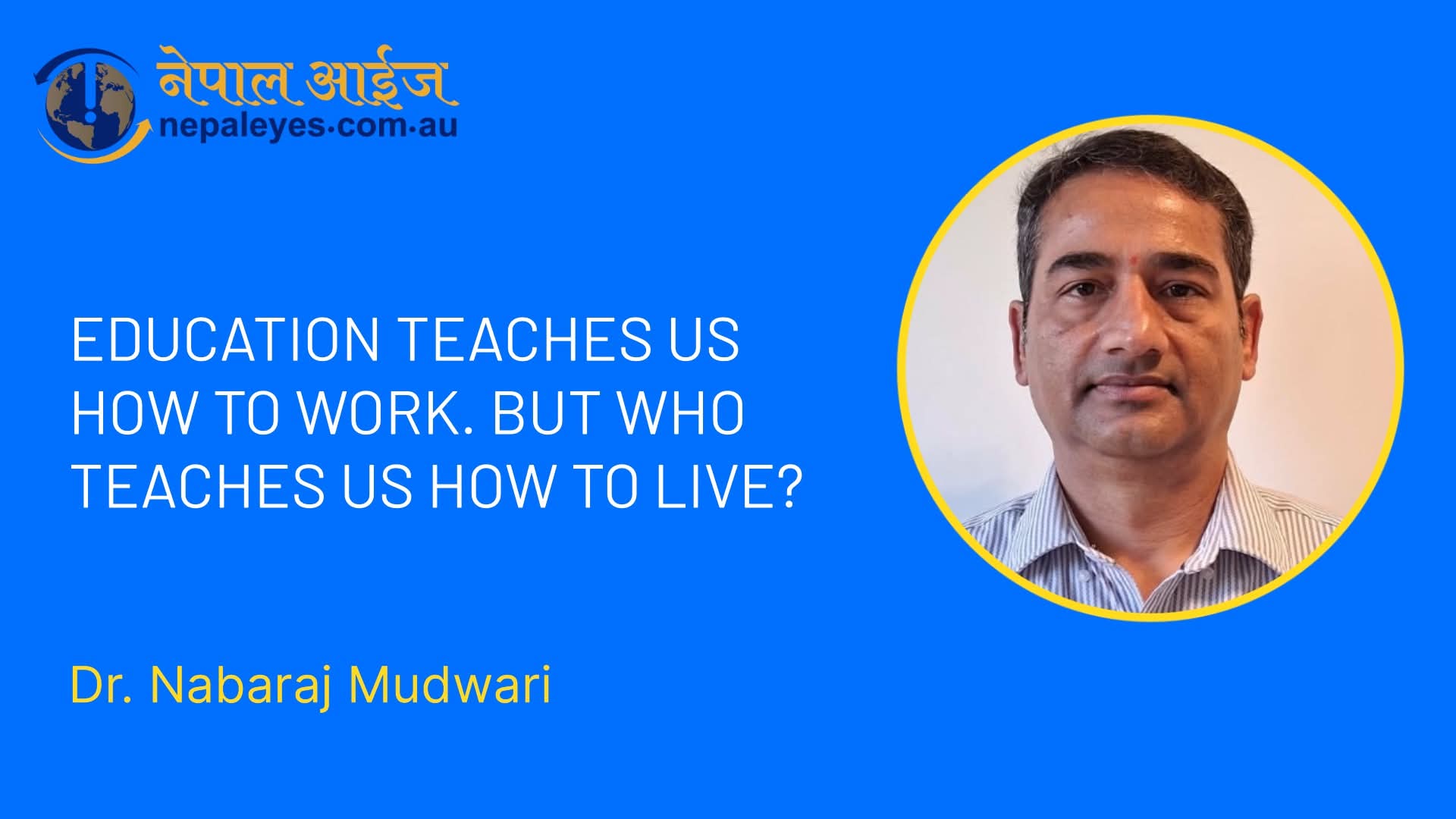
 By Dr. Nabaraj Mudwari
In many communities, spirituality is often treated as something for later in life.The common belief is that spiritual reflection can wait until children are grown, careers are complete, and retirement begins. Until then, education is expected to focus on academic achievement, employment, and material success.
But what if we have it backwards?
If spiritual knowledge helps people develop purpose, ethical judgement, and inner wellbeing, perhaps it is not something we should postpone. Perhaps it is most valuable when life is just beginning.
Education Teaches Us How to Work. But Who Teaches Us How to Live?
Schools and universities play a vital role in preparing young people for employment and economic participation. They teach literacy, numeracy, technical skills, and professional knowledge.
Yet an important question often remains unanswered: how do we learn to live well?
Children and young people today are growing up in an increasingly complex world. They face intense academic competition, social pressures, uncertainty about the future, and constant exposure to digital information. Success is often measured through grades, income, status, and achievement.
What is discussed less often is meaning.
How do children and young people develop self-awareness?
How do they learn resilience during setbacks?
How do they build values that guide decisions throughout life?
These are the questions spiritual education seeks to address.
Spirituality Is More Than Religion
One of the biggest misconceptions about spirituality is that it is simply another word for religion.
While spiritual traditions may be expressed through religion, spirituality itself is much broader. It involves developing a deeper understanding of oneself, one’s relationships with others, and one’s place in the world.
At its core, spirituality encourages reflection on questions that have challenged human beings across generations:
Who am I?
Why am I here?
What gives life meaning?
These questions are not only relevant to older adults. They matter just as much to adolescents navigating identity, belonging, and purpose.
The Missing Piece in the Wellbeing Conversation
Around the world, concerns about anxiety, stress, and emotional wellbeing continue to grow.
Despite unprecedented advances in science, technology, and material living standards, many people still struggle to find lasting contentment. Wealth, recognition, and professional success can provide comfort and opportunity, but they do not automatically create inner peace.
This raises an uncomfortable question.
Can we consider ourselves truly successful if we achieve externally but remain dissatisfied internally?
Spiritual knowledge offers a different perspective. Rather than focusing solely on external accomplishment, it encourages inner balance, self-reflection, and emotional stability.
For many people, that balance becomes an essential source of strength during life’s inevitable challenges.
Character Matters as Much as Achievement
Modern societies celebrate success. Less attention is often given to character.
Yet qualities such as honesty, compassion, humility, patience, and forgiveness remain fundamental to healthy communities. These values strengthen relationships, build trust, and contribute to social cohesion.
In increasingly competitive environments, however, such values can be easily overshadowed by individual ambition.
Spiritual education reminds us that education should not only produce capable professionals. It should also help develop ethical and responsible human beings.
After all, a good society depends not only on what people know, but on how they choose to use that knowledge.
Stronger Relationships Begin With Self-Understanding
Many of today’s social challenges are reflected in our relationships.
Family tensions, social isolation, conflict, and misunderstanding often emerge from an inability to understand ourselves and others.
Spiritual awareness encourages empathy, patience, and reflection. People who understand their own emotions and behaviours are often better equipped to appreciate different perspectives and respond constructively to conflict.
This is not simply a personal benefit. It has broader implications for families, workplaces, schools, and communities.
More Than a Personal Choice
Spirituality is often viewed as a private matter. Yet its benefits extend beyond individual wellbeing.
A society that values self-awareness, ethical responsibility, and compassion is likely to be more cohesive, respectful, and resilient.
As we continue investing in scientific innovation and technological progress, perhaps we should also ask whether we are investing enough in human development.
We are teaching people how to make a living. Are we also helping them learn how to live?
The Question We Should Be Asking
Material education teaches us how to build a career. But who teaches us how to build a meaningful life?
We spend years learning how to succeed in the world, yet how much time do we spend understanding ourselves?
If spirituality nurtures purpose, character, resilience, and inner peace, why do we treat it as something for old age?
Perhaps the real question is not whether spirituality matters in later life, but whether we can afford to neglect it.
Dr. Nabaraj Mudwari is an educator and writer whose work explores education, society, wellbeing, and spirituality. He has more than two decades of experience in teaching and educational leadership across schools, colleges, and universities.







Very interesting, however l do not fully agree with some of your idealogical views.
The world well live in is much more complex and drive by forces that are very destructive to your views and mine.
Therefore, to attain the attention of young people you really need to look at their way of life and simulate into that and then look at sharing our positive views on spirituality, wellbeing, the untouchable force of having a soul and spirit through the belief of the The Holy Bible or what faith holds strong with oneself.
Hi Luigi,
Thank you for your thoughtful comment. I agree that understanding young people’s lived experiences and engaging with them in ways that are meaningful to them is essential. My intention was not to promote spirituality through any particular religious tradition, but to highlight the importance of purpose, self-awareness, compassion and inner wellbeing in young people’s lives. I also appreciate your point that, in today’s complex world, these values need to be communicated in ways that resonate with young people and their everyday realities.
Regards, Nabaraj