How we can support young people experiencing bullying
 नेपालआईज
By : Adongwot Manyoul
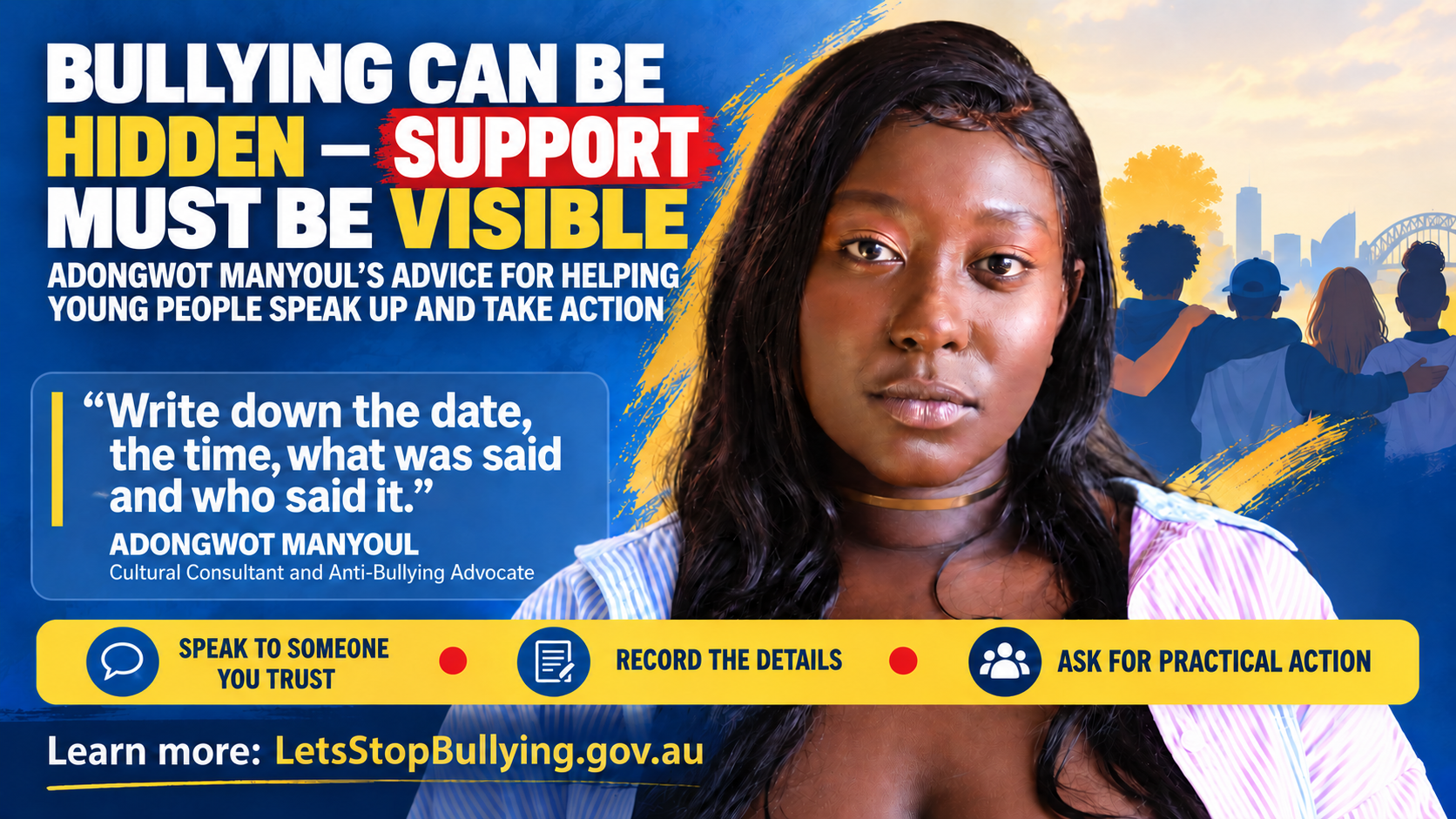
““I’m an older sibling, so seeing young people who need support and don’t know how to go about finding it ignites a spark in me,” says Adongwot Manyoul.
“Bullying is so closely linked to discrimination and racism, whether it’s being harassed, verbally attacked, or excluded. All the things that perpetuate feelings of not belonging or not being good enough.”
Adongwot is a Cultural Consultant working in anti-racism and cultural safety. Her mission is to help people understand how systems can work for some and against others, and help us recognise our role in changing those systems.
Bullying isn’t limited to physical acts and a lot of the time shows itself as small actions that are harder to identify but can be equally damaging.
“Young people today seem a lot more confident and less tolerant than they were when I was younger. But the people carrying out these behaviours are also bolder and can now say things online that they wouldn’t necessarily say to your face in real life,” she says.
In Adongwot’s experience, a key solution is building communities where young voices can be heard.
“Speaking to people you’re connected to can be a good way to start the conversation,” she says. “A lot of young people really just want to see practical, concrete action to come after reporting or talking about it.”
She continues, “Sometimes, a young person might also want to talk to other trusted young people about their experience. It’s important that we also have spaces run by young people for young people.”
Her advice is to seek support from those close to you who share your understanding and lived experiences.
“It can be your cousins or other relatives and family friends who are a bit older. Lean on them when things get tough.”
When an incident has already happened, Adongwot recommends recording the details.
“Write down the date, the time, what was said and who said it. When you have that information, you can work with a teacher or other trusted adult to create a plan to move forward.”
In her ideal future, everyone has the tools to deal with bullying.
“That’s why I do the work that I do,” she says, “because walking into rooms and starting conversations changes something.”
The Let’s Stop Bullying campaign aims to build understanding of bullying and other harmful behaviours. Adongwot is a proud anti-bullying advocate. To learn more about available resources, visit LetsStopBullying.gov.au